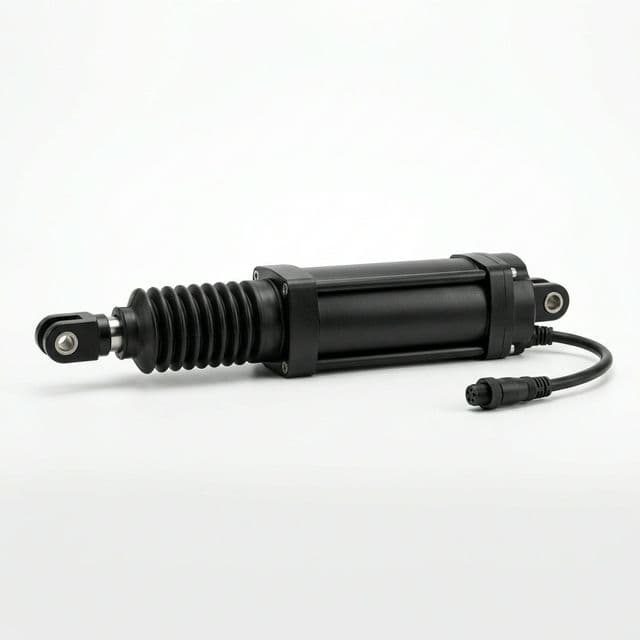
Linear Actuator Market Update (2026-W18): U.S. Aluminum Extrusion AD/CVD Review Signals and RFQ Controls
Week 18 brief for custom linear actuator buyers: U.S. aluminum extrusion AD/CVD signals and RFQ controls to limit cost, lead-time, and compliance surprises.
One-line decision (Week 18): keep your actuator IP/duty target classes unchanged this week, but immediately add AD/CVD-origin controls to RFQs for aluminum-extrusion-dependent programs before the next firm quote round.
Research window: 2026-03-28 to 2026-04-27 (last 30 days).
Audience: OEM engineers, sourcing managers, actuator buyers, and automation teams in U.S./EU/global programs.
For custom linear actuators, this week's pressure is procurement-control quality, not an IP-class redesign signal.
Why This Matters This Week
- Commercial risk can move before engineering specs change.
Preliminary AD/CVD outcomes can alter landed-cost assumptions before any actuator hardware redesign is justified. - RFQ data quality now decides quote reliability.
Missing producer/exporter/origin fields can trigger post-award repricing and schedule slips. - Reliability and compliance risks are now coupled in sourcing behavior.
Cost pressure can drive undocumented substitutions that affect sealing, interface stability, and warranty enforceability.
Applies to: U.S.-bound imports, EU/global OEM programs with extrusion-linked actuator BOMs, and distributors using shared RFQ templates.
Not in scope: legal advice, final duty-rate determinations, or any claim of a new mandatory actuator IP-rule release this week.
Last verified: 2026-04-27.
Start here: OEM Linear Actuator RFQ Checklist, IP54 vs IP67 vs IP69K Linear Actuator Selection, Week 17 Update, and Week 16 Update.
What Changed (Last 30 Days)
| Date | Primary source | What changed | Why actuator buyers should care now |
|---|---|---|---|
| 2026-04-14 | Federal Register (Doc 2026-07229, A-570-967) | U.S. Commerce published preliminary AD administrative review results for aluminum extrusions from China (POR 2024-05-01 to 2025-04-30). | Extruded actuator housings/tubes/profiles tied to China sourcing can face duty-assumption risk in quote models. |
| 2026-04-14 | Federal Register (Doc 2026-07229) | Commerce stated none of the reviewed firms demonstrated separate-rate eligibility; 18 firms treated as China-wide entity at 86.01%. | RFQs without producer/exporter mapping can hide high-duty exposure. |
| 2026-04-14 | Federal Register (Doc 2026-07229) | Review was rescinded in part for 79 firms. | Supplier status in your AVL can diverge from your historical duty assumptions; do not reuse old quote templates blindly. |
| 2026-04-15 | Federal Register (Doc 2026-07303, C-570-968) | U.S. Commerce published preliminary CVD administrative review results for aluminum extrusions (POR 2024-01-01 to 2024-12-31). | Countervailing duty risk can stack with AD assumptions for extrusion-heavy actuator BOMs. |
| 2026-04-15 | Federal Register (Doc 2026-07303) | Six named exporters/producers were assigned 164.29% ad valorem preliminary subsidy rates using facts available with adverse inferences. | High-rate scenarios must be stress-tested before MOQ commitments on China-origin profile programs. |
| 2026-04-22 | TI Q1 2026 release | TI reported industrial-led growth and Q2 guidance while still listing trade-policy and inventory-adjustment risks. | Control-interface BOMs (drivers, feedback electronics, control boards) still require alternate-source and validity-window discipline. |
Research Method (3 Rounds, Strict Scope)
| Round | Scope | Verified result | Publish relevance |
|---|---|---|---|
| Round 1 | Actuator regulation / certification / safety / reliability | No new actuator-specific mandatory IP/safety rule in-window. IEC 60529 webstore still shows edition 2.0 with stability date 2027 and under-development status; OSHA April notice sampled here is test-site scope expansion, not an actuator product-rule rewrite. | Strong boundary: do not claim a new compulsory actuator IP standard this week. |
| Round 2 | Sourcing / lead-time / OEM buyer impact | Strong buyer-level signal found: U.S. AD/CVD preliminary review outcomes for aluminum extrusions (A-570-967, C-570-968) with explicit high-rate outcomes and partial rescissions. | Direct effect on quote validity, landed-cost scenarios, and supplier qualification gates. |
| Round 3 | Verify only Round 1-2 candidates | Re-checked official Federal Register documents, IEC lifecycle page, and EC machinery harmonised-standards listing. No lateral expansion to generic automation headlines. | Evidence is sufficient for a buyer-facing weekly update. |
Decision-Level Conclusion for Buyers
- This is a procurement-control week, not an IP-class redesign week.
The strongest new signal is trade-remedy math on aluminum extrusions, not a new actuator ingress-protection mandate. - RFQ and quote-control failure is now a larger risk than design-spec failure for most extrusion-heavy programs.
Missing producer/exporter/duty fields can cause post-award repricing and launch slips. - Controller/feedback electronics remain a secondary risk channel.
Demand remains strong in industrial semiconductors, while policy and inventory adjustments still appear in supplier risk language.
Which Actuator Types and Applications Are Most Exposed
| Actuator type / application | Exposure channel | Practical impact | Buyer control |
|---|---|---|---|
| Custom electric linear actuators with extruded aluminum outer tube | AD/CVD uncertainty on China-origin extrusion inputs | Quote volatility on housing-heavy SKUs | Add producer/exporter trace fields and duty-scenario pricing lines |
| IP67/IP69K outdoor actuator families using machined/extruded housings | Cost pressure can trigger silent material-source substitutions | Seal interface and durability variance risk | Add no-silent-substitution + revalidation trigger in RFQ |
| Heavy-duty industrial actuator assemblies | Larger metal-content share amplifies duty sensitivity | Greater landed-cost variance versus baseline | Require dual-sourcing and origin-stamped alternates |
| Vehicle-adjacent actuator modules and bracket sets | Multi-part imports with mixed origin declarations | Classification/documentation mismatch risk | Separate mechanical and electronics sub-line quoting |
| Integrated actuator + controller packages | Electronics market demand and inventory adjustments | Interface BOM lead-time and repricing pressure | Freeze control-interface revision and AVL fallback list |
| Distributor private-label actuator SKUs | Supplier stack opacity across sub-tier extrusion vendors | Margin erosion from hidden duty pass-through | Enforce pre-quote compliance-data completeness gate |
Cost, Lead-Time, Reliability, and Spec Impact
| Dimension | Evidence-backed impact | Unknowns that remain | Decision now |
|---|---|---|---|
| Cost | AD/CVD preliminary outcomes indicate high potential exposure for some China-linked extrusion paths (86.01% China-wide AD reference; 164.29% CVD rate for six nonresponsive firms). | Final rates are pending final results and case/rebuttal process. | Run base/adverse duty scenarios before firm PO. |
| Lead time | Trade-status uncertainty can trigger supplier repricing loops and source shifts before final-rate publication. | Exact supplier response timing is vendor-specific. | Keep quote validity short and enforce refresh checkpoints. |
| Reliability | Cost-driven substitution risk can alter sealing stack, wall thickness, and coating choices. | Many suppliers do not proactively disclose sub-tier changes. | Require ECO disclosure and validation trigger on source change. |
| Spec fit | No new mandatory actuator IP rule was verified this week; spec drift risk comes from sourcing substitutions, not new standard text. | Supplier-level test-package depth varies widely. | Keep target IP class; tighten evidence requirements. |
| Warranty | Disputes rise when commercial terms are detached from approved BOM and test evidence. | Enforceability depends on clause precision and document control. | Bind warranty to approved BOM revision and validation records. |
RFQ and Supplier-Data Controls to Add This Week
| Field / clause | Why it is required now | Minimum evidence |
|---|---|---|
| Producer and exporter legal entity name | Needed to map AD/CVD status accurately | Signed supplier declaration per quote revision |
| Country of extrusion and final machining | Prevents generic origin assumptions | Process-route statement with facility name |
| HTS/HS code at line-item level | Enables duty scenario model integrity | Code mapping with broker pre-check |
| AD/CVD applicability statement | Avoids hidden pass-through post-award | Commercial letter with assumptions date-stamped |
| Duty-scenario split pricing (base vs adverse) | Supports risk-weighted award decision | Two-line quote structure by scenario |
| Quote validity window | Reduces exposure to policy/assessment drift | Explicit expiry date in quote T&Cs |
| Substitution disclosure clause | Protects IP/duty/interface integrity | ECO/deviation workflow attachment |
| Controller/feedback interface lock | Prevents integration rework from silent electronics swaps | Pinout/protocol revision table |
| Revalidation trigger for source changes | Links sourcing to field reliability control | Agreed retest matrix (IP, duty, thermal) |
| Warranty linkage to approved BOM | Improves post-failure claim enforceability | Warranty annex tied to BOM revision ID |
Action Checklist (Who Should Act Now)
| Role | Action | Deadline | Deliverable |
|---|---|---|---|
| Sourcing manager | Issue RFQ v2 with AD/CVD-origin fields and scenario pricing lines | Within 3 business days | Controlled RFQ template + supplier acknowledgment |
| Trade compliance owner | Map active SKUs to extrusion-origin and AD/CVD exposure assumptions | This week | SKU exposure register |
| OEM engineer | Freeze housing and controller interface revisions for current quote cycle | This sprint | Engineering appendix attached to RFQ |
| Quality/reliability lead | Add source-change revalidation gate (IP, duty, thermal) | Before pilot gate | Revalidation SOP |
| Program manager | Add repricing trigger and evidence requirements into contract addendum | Before PO release | Commercial addendum |
| Distributor sales ops | Block firm quote release until compliance data is complete | Immediate | Quote gate checklist |
Risks and Limits
| Risk / boundary | Why it matters | Mitigation |
|---|---|---|
| AD/CVD results cited here are preliminary, not final | Overstating certainty can distort award decisions | Use scenario pricing until final results are published |
| Rescission lists and no-entry lists are long and dynamic | Wrong supplier mapping can invalidate landed-cost model | Validate legal entity mapping before quote acceptance |
| No new actuator-specific IP mandate verified in this window | Teams may over-rotate into unnecessary IP redesign | Keep current IP targets; focus on evidence control |
| TI release is a macro supplier signal, not actuator-specific lead-time bulletin | Misuse can produce false precision in schedule planning | Use TI data as directional support only, not sole lead-time basis |
| EU machinery page did not show April 2026 machinery MD entry | EU-side change trigger may be missed if teams rely on old snapshots | Keep watchlist active and time-stamp all compliance assumptions |
Related Execution Links
- OEM Linear Actuator RFQ Checklist
- IP54 vs IP67 vs IP69K Linear Actuator Selection
- Week 17 Update
- Contact the engineering team
FAQ
1) Is this week mainly an IP-rating regulation change?
No. The strongest verified change this week is sourcing and duty exposure around aluminum extrusions, not a new mandatory actuator IP rule.
2) Did the U.S. publish both AD and CVD extrusion review signals in this window?
Yes. AD preliminary results were published on 2026-04-14 and CVD preliminary results on 2026-04-15.
3) Do the preliminary values mean final duty outcomes are locked?
No. Final results are expected within 120 days after publication of preliminary results unless extended.
4) Why should actuator teams care if they buy assemblies, not raw extrusion?
Because assembly quotes often embed extrusion cost and duty assumptions. If upstream assumptions shift, your final actuator quote and MOQ terms shift too.
5) Should we change IP54/IP67/IP69K targets now?
Usually no. Keep target classes stable unless your application conditions changed; tighten validation and substitution controls instead.
6) Which teams must move first this week?
Sourcing and trade-compliance teams, then engineering and quality to enforce substitution-triggered validation.
7) How should we treat controller lead-time risk from this week’s evidence?
Use it as a directional risk signal. Keep alternate-source planning and short quote-validity windows; do not treat macro earnings language as a direct actuator lead-time guarantee.
8) What is the most common avoidable mistake now?
Awarding on a single landed-cost assumption without producer/exporter mapping and without AD/CVD scenario pricing.
Sources
-
Aluminum Extrusions From the People's Republic of China: Preliminary Results and Rescission, in Part, of Antidumping Duty Administrative Review; 2024-2025
Organization: U.S. Department of Commerce, International Trade Administration (Federal Register)
Date: 2026-04-14
URL: https://www.federalregister.gov/documents/2026/04/14/2026-07229/aluminum-extrusions-from-the-peoples-republic-of-china-preliminary-results-and-rescission-in-part-of -
Aluminum Extrusions From the People's Republic of China: Preliminary Results and Rescission, in Part, of Countervailing Duty Administrative Review; 2024
Organization: U.S. Department of Commerce, International Trade Administration (Federal Register)
Date: 2026-04-15
URL: https://www.federalregister.gov/documents/2026/04/15/2026-07303/aluminum-extrusions-from-the-peoples-republic-of-china-preliminary-results-and-rescission-in-part-of -
TI reports first quarter 2026 financial results and shareholder returns
Organization: Texas Instruments
Date: 2026-04-22
URL: https://www.ti.com/about-ti/newsroom/news-releases/2026/2026-04-22-ti-reports-first-quarter-2026-financial-results-and-shareholder-returns.html -
IEC 60529:1989 (publication page, lifecycle details)
Organization: IEC
Date accessed: 2026-04-27
URL: https://webstore.iec.ch/en/publication/2447 -
TÜV SÜD America, Inc.: Application for Expansion of Recognition
Organization: Occupational Safety and Health Administration (Federal Register)
Date: 2026-04-14
URL: https://www.federalregister.gov/documents/2026/04/14/2026-07142/tv-sd-america-inc-application-for-expansion-of-recognition -
Machinery (MD) harmonised standards page (Directive 2006/42/EC)
Organization: European Commission (DG GROW)
Date accessed: 2026-04-27
URL: https://single-market-economy.ec.europa.eu/single-market/goods/european-standards/harmonised-standards/machinery-md_en
Bottom-line next steps: Reissue RFQ fields now, keep IP target classes but tighten evidence controls, align sourcing assumptions with Week 17 signals, and sync commercial clauses before PO release.
Author

IP54/IP67/IP69K targets now?6) Which teams must move first this week?7) How should we treat controller lead-time risk from this week’s evidence?8) What is the most common avoidable mistake now?SourcesMore Posts
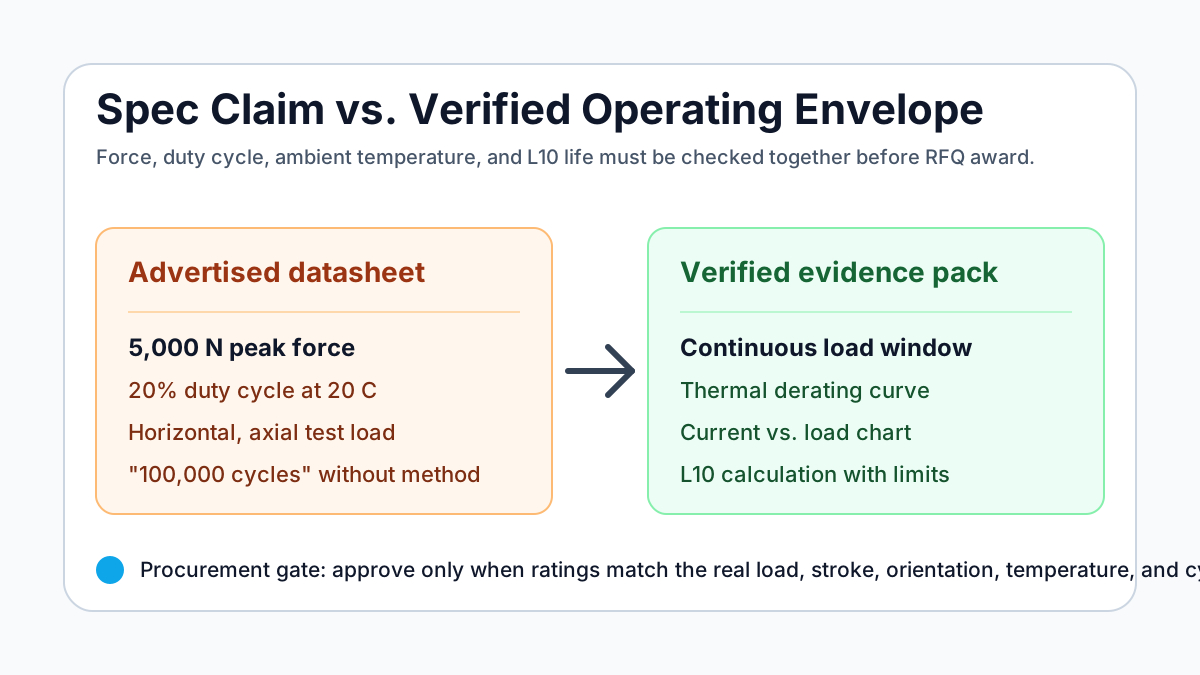
Linear Actuator Spec Inflation: A Procurement Guide to Verifying Force, Duty Cycle, and Lifespan Ratings
Verify linear actuator force, duty cycle, and L10 life claims before RFQ award. Use supplier evidence checks to avoid inflated specs and early failures.
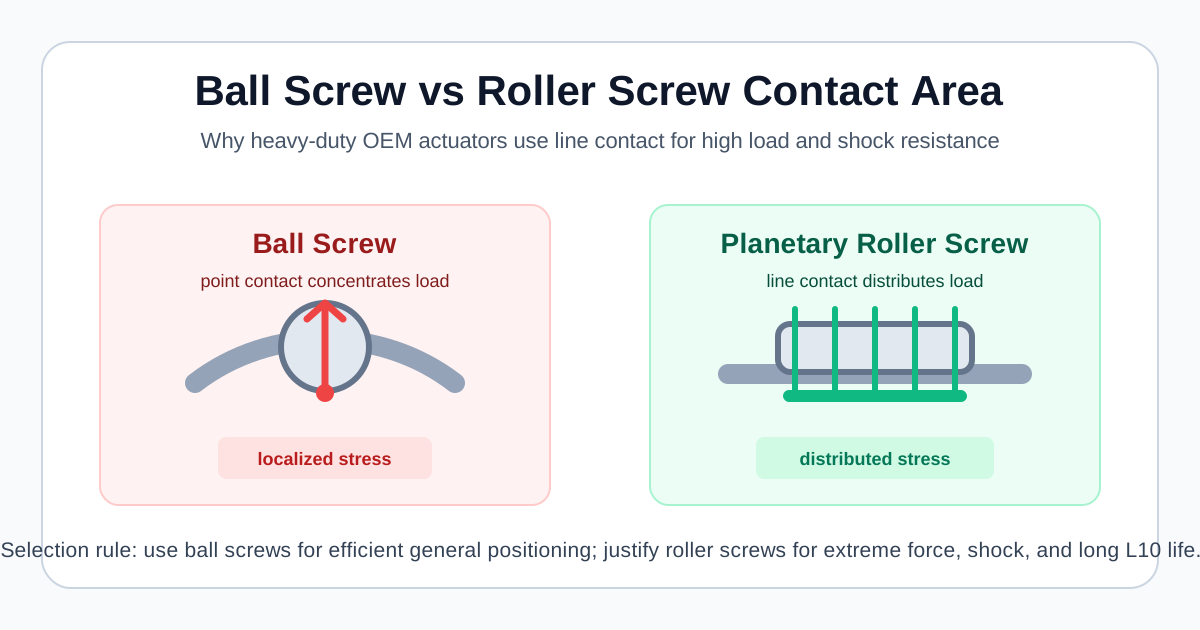
Ball Screw vs. Planetary Roller Screw Linear Actuators: A Heavy-Duty OEM Sourcing Guide
Compare ball screw vs roller screw linear actuators for heavy-duty OEM sourcing. Review load, life, cost, duty cycle, and RFQ inputs before you request a quote.
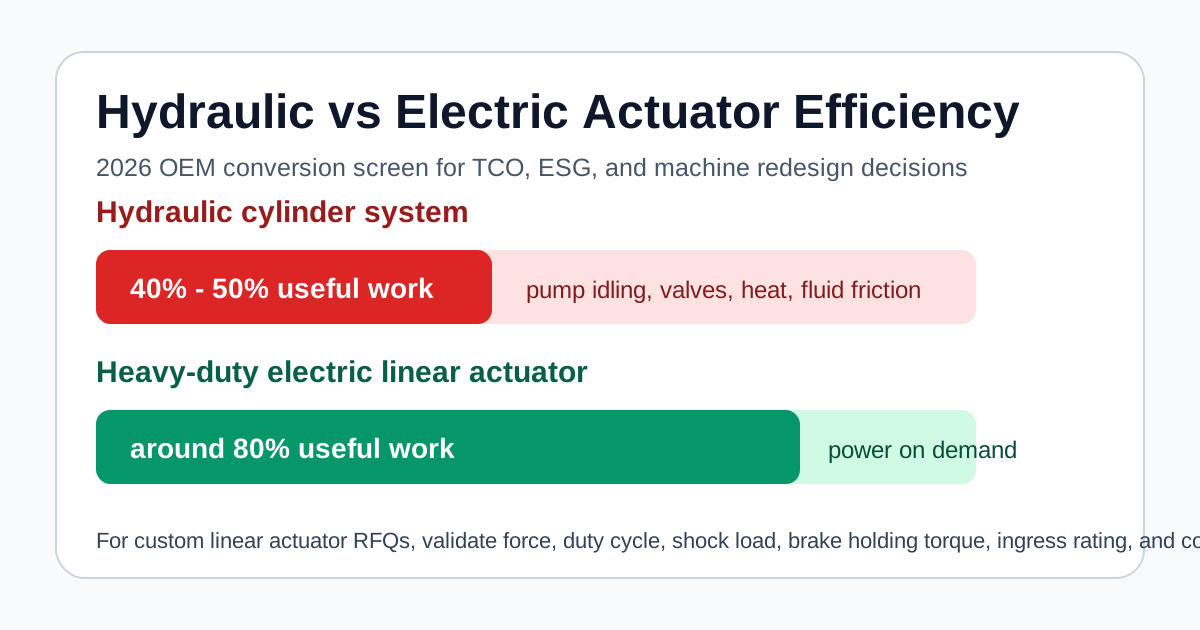
Replacing Hydraulic Cylinders with Heavy-Duty Electric Actuators: The 2026 OEM Guide to TCO and ESG
Compare hydraulic cylinders with custom electric linear actuators for 2026 OEM TCO, ESG, sizing trade-offs, and RFQ inputs before a conversion project.