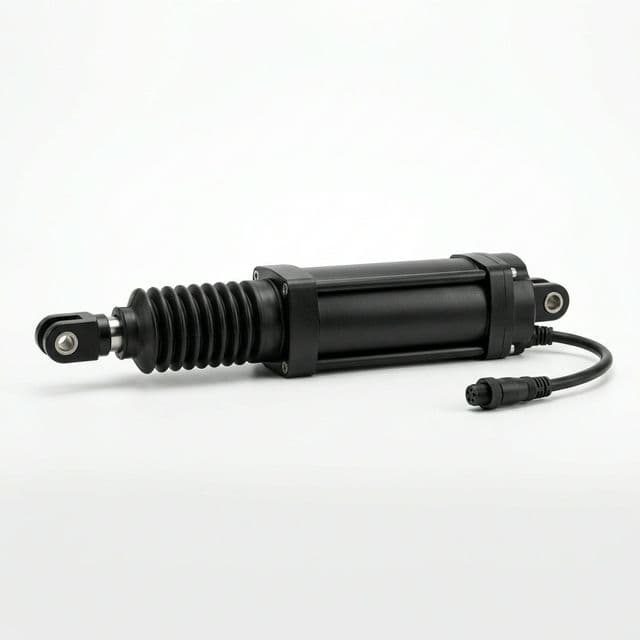
July 2026 Section 122 Expiration: Linear Actuator Sourcing
Week 28 brief for custom linear actuator buyers: confirm July 24 Section 122 timing, bonded-entry options, RFQ repricing, and limits.
Executive Summary / Decision-Level Conclusion (Week 28): Proclamation 11012 applied a 10% import surcharge from 12:01 a.m. EST on February 24, 2026 through 12:01 a.m. EDT on July 24, 2026. Under 19 U.S.C. § 2132, the authority cannot continue beyond 150 days unless Congress approves it by joint resolution. OEM buyers should confirm broker instructions for entries and warehouse withdrawals around July 24-25, model bonded warehouse or FTZ holds for non-urgent inventory, and request Q3 RFQ revisions where suppliers priced in the temporary surcharge.
Research window: 2026-06-11 to 2026-07-10.
Audience: OEM engineers, sourcing managers, actuator buyers, automation teams, and trade-compliance reviewers.
For custom linear actuators, the issue matters because finished electromechanical assemblies often combine motors, PCBs, gearboxes, lead screws, and aluminum housings in one customs entry. A 10% temporary surcharge can change RFQ award decisions, safety-stock timing, and whether an OEM accepts a European, Asian, USMCA, or domestic-source quotation for Q3 production.
Start here: OEM Linear Actuator RFQ Checklist, Week 27 HTSUS Tariff Thresholds, IP54 vs IP67 vs IP69K Selection, continuous duty actuator guidance, and contact engineering for project-specific review.
Applies to: U.S.-bound global imports of custom linear actuators, heavy-duty industrial positioners, and electromechanical sub-assemblies.
Not in scope: Legal advice, customs brokerage instructions, or retroactive refund claims. Do not apply this to domestic-only supply chains.
Important limitation: The proclamation text runs through 12:01 a.m. EDT on July 24, 2026. Many teams may use July 25 as an operational buffer, but tariff treatment depends on CBP/ACE instructions, entry type, warehouse status, and any later court or congressional action. Relief is not assumed for goods already entered or withdrawn for consumption before the sunset.
Last verified: 2026-07-10.
Why This Week Matters
For buyers of custom linear actuators, the July 24 deadline is a cost, timing, and specification-control issue rather than a headline-only trade story. The 10% surcharge increased landed-cost models for covered imports during the February-July window. With the statutory 150-day limit approaching, OEM procurement teams can pressure-test Q3 quotes, compare EU and Asian actuator bids against nearshore options, and decide whether a short bonded-hold is worth the inventory delay. The decision window is narrow because the relevant commercial event is customs entry or withdrawal for consumption, not the supplier's invoice date.
What Changed (Last 30 Days)
The legal and regulatory status of the Section 122 surcharge has evolved rapidly, creating a narrow window for strategic sourcing maneuvers.
Timeline and Regulatory Status
| Date | Event / Milestone | Actuator Sourcing Impact | Source |
|---|---|---|---|
| Feb 24, 2026 | Proclamation 11012 tariff modification became effective at 12:01 a.m. EST | Covered finished actuators and actuator sub-assemblies required a 10% landed-cost line item. | Federal Register |
| May 7, 2026 | U.S. Court of International Trade (USCIT) issued a ruling in the Section 122 litigation | Refund assumptions remain unsafe while appeal/stay status and liquidation treatment remain unresolved. | USCIT |
| July 24, 2026 | Proclamation text states the surcharge continues through 12:01 a.m. EDT; 19 U.S.C. § 2132 sets the 150-day limit | New entries after the sunset are expected to avoid the Section 122 line only if CBP/ACE instructions and entry facts support it. | Federal Register / 19 U.S.C. § 2132 |
Applicable Boundaries: European Union vs. USMCA Sourcing
The Section 122 sunset can change relative actuator sourcing competitiveness, but it does not erase every tariff or compliance variable. During the 150-day surcharge period, many goods qualifying for preferential treatment under the United States-Mexico-Canada Agreement (USMCA) were excluded from the Section 122 surcharge. After the July 24 sunset, European Union and Asian actuator quotations should be re-modeled against nearshore and domestic alternatives, while China-origin projects still require separate Section 301 review.
Regional Sourcing Impact Matrix
| Origin Region | Surcharge Status (Feb-July 2026) | Post-July 24 Status | Buyer Procurement Action |
|---|---|---|---|
| European Union (e.g., Germany, Italy) | Generally modeled as subject to 10% Section 122 unless another exclusion applied | Expected Section 122 removal after sunset; verify Chapter 99 and product-specific duties | Re-evaluate EU suppliers for precision servo actuators and require quote lines that separate tariff assumptions. |
| USMCA (Mexico, Canada) | Often excluded when USMCA qualification was valid | No Section 122 improvement if already excluded | Keep nearshore lead-time advantage, but use revised EU/Asia quotes as a price benchmark. |
| Asia (excl. China 301) | Generally modeled as subject to 10% Section 122 unless another exclusion applied | Expected Section 122 removal after sunset; verify country-specific controls and entry facts | Negotiate out temporary-surcharge premiums from Q3/Q4 volume blanket orders. |
| China | Section 122 could stack with Section 301 or other measures depending on classification | Only the temporary Section 122 line is expected to fall away | Model the 10% reduction separately; do not remove Section 301, 232, AD/CVD, or product-specific duties. |
Impact on Custom Linear Actuators
The removal of a 10% temporary surcharge can materially alter the BOM (Bill of Materials) model for heavy-duty and precision linear actuators. Because actuators consolidate multiple high-value components (DC/AC motors, precision lead screws, custom aluminum extrusions, and control PCBs), even a short-lived import line can change supplier ranking, payment terms, and whether the buyer accepts a redesign to a different IP rating, duty cycle, or control interface.
Cost Impact Assessment
Illustrative landed-cost model for a 12V/24V IP67 industrial actuator (MOQ: 1,000 units), before other duties, freight, brokerage, and product-specific tariff lines.
| Actuator Profile | Pre-July 24 Landed Cost (per unit) | Post-July 24 Landed Cost (per unit) | Net BOM Impact | Procurement Action |
|---|---|---|---|---|
| Heavy-Duty Aluminum (10,000N) | $165.00 (+10% line = $181.50) | $165.00 if Section 122 no longer applies | -$16.50 | Ask broker whether bonded warehouse or FTZ hold is viable if arriving mid-July. |
| Precision Servo (Ball Screw) | $320.00 (+10% line = $352.00) | $320.00 if Section 122 no longer applies | -$32.00 | Use July 25 as a conservative filing target only after broker confirmation. |
| Compact IP69K Washdown | $85.00 (+10% line = $93.50) | $85.00 if Section 122 no longer applies | -$8.50 | Renegotiate Q3 blanket orders and require the supplier to show the duty basis. |
Action Checklist / Who Should Act Now
OEM engineering and purchasing teams must align immediately to capture these savings. Suppliers will not proactively volunteer price reductions on existing long-term agreements (LTAs) unless prompted.
Immediate Decisions for Buyers
- In-Transit Audits: Identify actuator shipments currently on the water or in the air and map estimated arrival, entry type, importer of record, and production need date.
- Broker-Confirmed Hold Options: For non-urgent inventory, ask the customs broker whether a Customs Bonded Warehouse or Foreign Trade Zone (FTZ) route is available before clearing customs. Enter or withdraw for consumption only when CBP instructions and the shipment facts support the intended treatment.
- RFQ Scrubbing: For Q3 and Q4 actuator RFQs, separate the temporary 10% surcharge assumption from core material, labor, freight, Section 301/232, AD/CVD, and brokerage costs. Demand a revised BOM breakdown.
- Specification Freeze Review: If tariff timing shifts the winning supplier, re-check actuator IP rating, duty cycle, stroke tolerance, feedback sensor, connector, and control interface before moving an award.
- Lead Time Adjustments: If delaying entry causes a 1-2 week lead time extension, confirm with production planning that safety stock can absorb the delay.
Buyer Action Thresholds: Bonded Warehouse Cost-Benefit
To help procurement teams decide when delaying customs entry is mathematically viable, compare the expected 10% savings against the administrative and storage costs of utilizing a bonded facility for 1-2 weeks.
| Actuator Shipment Value | Expected 10% Savings | Est. Storage/Admin Cost | Net Buyer Advantage | Action Threshold |
|---|---|---|---|---|
| $10,000 (Low Volume) | $1,000 | ~$400 | +$600 | Marginal: clear immediately if production is waiting or broker fees rise. |
| $50,000 (Medium Volume) | $5,000 | ~$600 | +$4,400 | Favorable: request bonded warehouse or FTZ routing unless critically urgent. |
| $250,000 (Container Load) | $25,000 | ~$1,200 | +$23,800 | High priority: hold only if broker, carrier, and customer delivery commitments align. |
Risks and Limits
Relying on the July 24 expiration carries specific regulatory and operational risks:
- Congressional Action: The expiration occurs by "Operation of Law" under 19 U.S.C. § 2132 unless Congress intervenes. While unlikely within the current timeline, legislative action could extend the surcharge.
- Port / Broker Congestion: Expect possible localized delays at major ports and broker desks as importers across industries attempt to file entries after the sunset. Factor this bottleneck into linear actuator lead times.
- No Retroactive Refunds: Do not expect a refund for the 10% surcharge paid on actuators entered between February 24 and July 24. While the USCIT case remains active, securing refunds will be a prolonged legal battle with no guaranteed outcome.
- Supplier Resistance: Suppliers who act as the Importer of Record (DDP terms) may attempt to maintain current pricing to increase their margins. OEM buyers must demand transparency on entry dates and duty structures.
- Evidence Gaps / Legal Appeal Outcomes: The U.S. Court of International Trade (USCIT) ruled the Section 122 surcharge invalid in May, but enforcement continues under appeal. If the appellate court ultimately strikes it down retroactively, the process for reclaiming duties paid between February and July remains undefined. Do not book expected refunds into Q3 financial planning until a final unappealable ruling is issued.
- Classification Still Controls: The surcharge sunset does not validate an HTS code, origin claim, USMCA certificate, duty-drawback position, or Section 301/232 exclusion. Confirm classification and origin before repricing a production actuator program.
FAQ
Q: Does the July 24 expiration apply to Section 301 tariffs on Chinese actuators?
A: No. The July 24 expiration applies strictly to the 10% global balance-of-payments surcharge under Section 122. Existing Section 301, 232, and Anti-Dumping/Countervailing Duties (AD/CVD) remain entirely unaffected.
Q: If my actuator shipment arrives at the port on July 20, do I have to pay the tax?
A: Vessel arrival date and consumption entry date are different customs events. A bonded warehouse or FTZ route may let a non-urgent shipment avoid consumption entry until after the sunset, but the broker must confirm eligibility, timing, and CBP/ACE handling before you rely on the savings.
Q: Will actuator lead times increase because of this?
A: Possibly. A bonded hold, carrier appointment, or broker backlog can add days to 1-2 weeks depending on port, entry type, and urgency. Do not delay safety-critical actuator inventory without production approval.
Q: How do I handle Q4 supplier contracts that already include the 10% premium?
A: Issue a formal RFQ revision request immediately. Inform suppliers that the 10% premium will not be accepted for goods delivered in Q4, and require a re-quoted BOM.
Q: Does a tariff change allow me to change actuator specifications late in sourcing?
A: Treat the tariff change as a commercial trigger, not an engineering waiver. If a supplier switch changes IP rating, duty cycle, cable exit, feedback sensor, connector, or controller interface, require an engineering review before issuing a production purchase order.
Related Execution Links
- OEM Linear Actuator RFQ Checklist - use this when asking suppliers to separate temporary tariff assumptions from actuator BOM pricing.
- Week 27 HTSUS Tariff Thresholds - compare Section 122 timing with other tariff thresholds that may still apply.
- IP54 vs IP67 vs IP69K Linear Actuator Selection - re-check enclosure requirements before switching suppliers.
- Continuous Duty Linear Actuator Guidance - confirm duty-cycle assumptions before approving a lower-cost replacement.
- 12V Linear Actuator Controller Guide - validate control interface and feedback wiring before changing actuator source.
- Contact engineering - send drawings, duty cycle, IP rating, load, stroke, speed, and target delivery window for review.
Sources
- Federal Register: Proclamation 11012, Imposing a Temporary Import Surcharge to Address Fundamental International Payments Problems, including February 24, 2026 effective timing and July 24, 2026 sunset language. Verified 2026-07-10. Source
- U.S. Code: 19 U.S.C. § 2132, balance-of-payments import surcharge authority and 150-day congressional-approval limit. Verified 2026-07-10. Source
- U.S. Customs and Border Protection (CBP): CSMS guidance for Proclamation 11012 entry treatment. Verified 2026-07-10. Source
- U.S. Customs and Border Protection (CBP): Customs Bonded Warehouses program overview. Verified 2026-07-10. Source
- U.S. Court of International Trade (USCIT): State of Oregon v. United States, Section 122 litigation order referenced for refund-risk discussion. Verified 2026-07-10. Source
- Office of the U.S. Trade Representative (USTR): Presidential tariff actions status page for current trade-action context. Verified 2026-07-10. Source
Author

More Posts
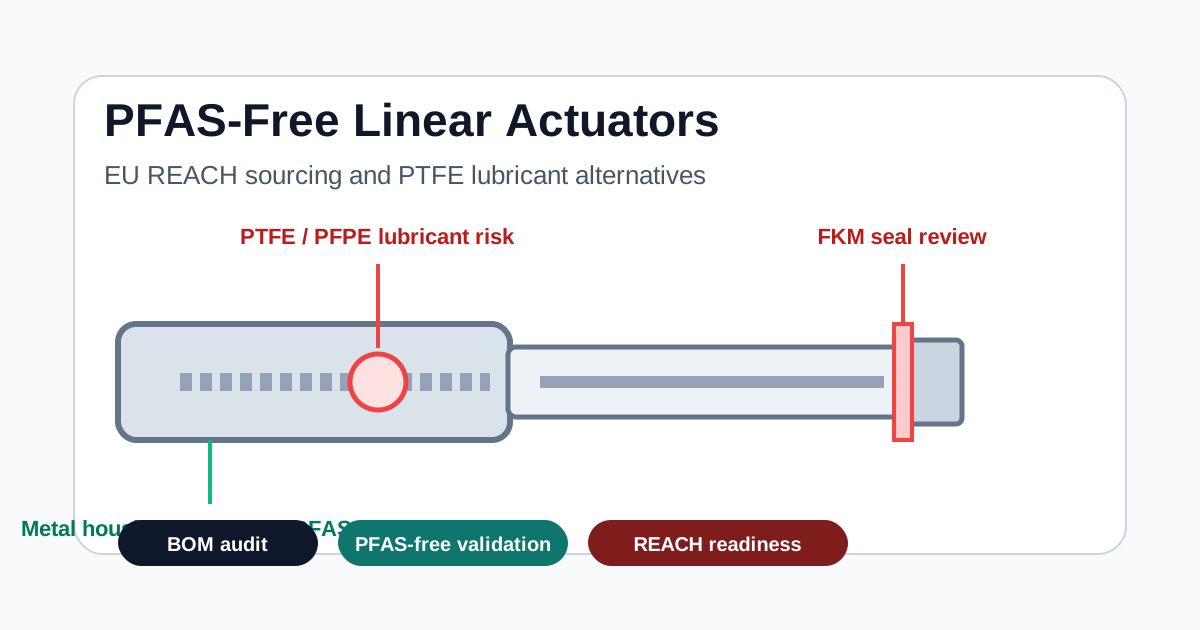
PFAS-Free Linear Actuators: EU REACH Sourcing Guide
Source PFAS-free linear actuators for EU REACH readiness: audit PTFE/PFPE greases, compare seal alternatives, and contact engineering for RFQ review.
Linear Actuator Market Update (2026-W17): Mexico Aluminum Import Notice, U.S. Full-Value 232, and Sourcing Controls
Week 17 brief for custom linear actuator buyers: Mexico aluminum notice and U.S. full-value 232 updates, plus RFQ and sourcing controls to apply before PO release.
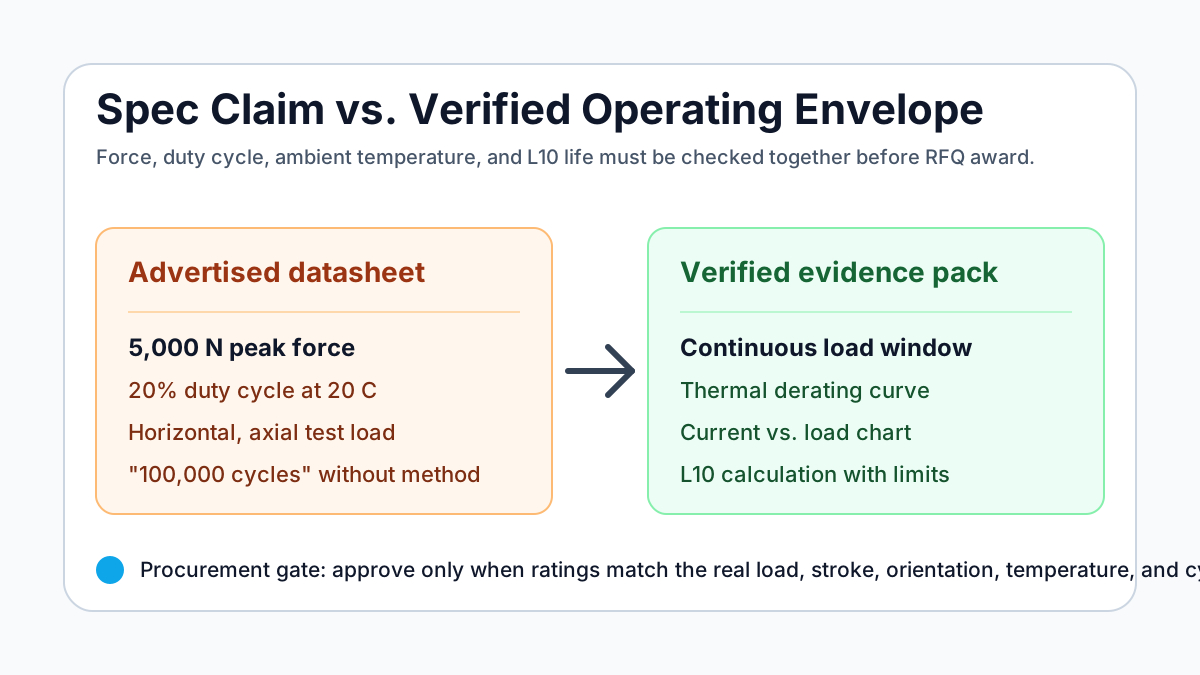
Linear Actuator Spec Inflation: A Procurement Guide to Verifying Force, Duty Cycle, and Lifespan Ratings
Verify linear actuator force, duty cycle, and L10 life claims before RFQ award. Use supplier evidence checks to avoid inflated specs and early failures.