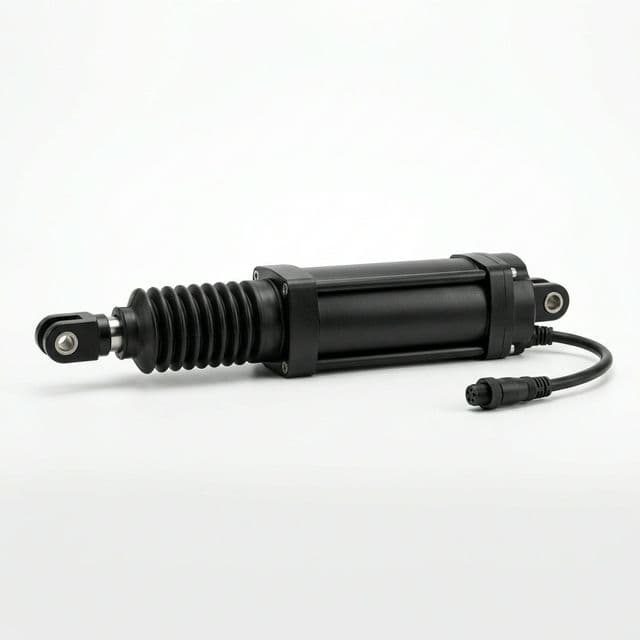
Linear Actuator Market Update (2026-W27): Proclamation 11032 Shifts Section 232 Tariff Thresholds and RFQ Sourcing Strategies
Week 27 brief for custom linear actuator buyers: Proclamation 11032 lowers the U.S.-origin metal threshold to 85%; update RFQs and HTS evidence before award.
One-line decision (Week 27): Proclamation 11032 was signed on June 1, 2026, published in the Federal Register on June 4, 2026, and applies to covered goods entered on or after June 8, 2026. OEM sourcing teams should update actuator RFQs now to request covered-metal origin, melt/pour or smelt/cast evidence, HTSUS assumptions, and entered-value treatment before awarding U.S.-bound actuator programs.
Research window: 2026-06-01 to 2026-07-03.
Audience: OEM engineers, sourcing managers, actuator buyers, automation teams, and trade-compliance reviewers.
For custom linear actuators, the impact is on landed cost, supplier comparison, and documentation for metal-heavy components such as aluminum extrusion housings, steel lead screws, gearing, brackets, and copper motor windings.
Start here: OEM Linear Actuator RFQ Checklist, IP54 vs IP67 vs IP69K Linear Actuator Selection, Week 19 HTSUS RFQ Controls, and contact engineering for project-specific review.
Applies to: U.S.-bound imports, covered derivative aluminum/steel/copper products, heavy-duty industrial actuators with high metal content, and OEM RFQ sourcing strategies.
Not in scope: Legal advice, customs brokerage instructions, or SKU-level binding tariff rulings. Do not apply this actuator-specific sourcing analysis to broad semiconductor, automotive, or consumer electronics sectors.
Important limitation: The 85% test is not a product-weight de minimis exemption. It is a covered-metal-origin threshold: a product's aluminum, steel, and copper content can be treated as entirely U.S.-origin only when qualifying U.S. metal accounts for at least 85% of the weight of the aluminum, steel, and copper in the product.
Last verified: 2026-07-03.
Why This Week Matters
Proclamation 11032 changes the Section 232 treatment of covered aluminum, steel, and copper products and their derivatives. For buyers of custom linear actuators, the practical issue is not only whether a supplier can build the actuator. It is whether the supplier can document the metal origin and HTSUS treatment well enough for the buyer to compare true landed cost.
The most important buyer-facing change is the move from a 95% to an 85% U.S.-origin threshold for covered metal content. A supplier that could not clear the old 95% threshold may now qualify for lower duty treatment if its covered metal content clears the new 85% threshold and the product otherwise fits the applicable HTSUS treatment. Buyers who do not ask for this evidence in RFQs risk comparing quotes on unit price while missing the tariff basis that changes landed cost.
What Changed (Last 30 Days)
| Date | Primary source | What changed | Why actuator buyers should care now |
|---|---|---|---|
| 2026-06-01 signed; 2026-06-04 published | Federal Register Proclamation 11032, document 2026-11314, 91 FR 34085 | Modified Proclamation 11021 and changed the threshold for covered aluminum, steel, and copper content from 95% to 85%. | Opens a narrower but realistic RFQ path for suppliers that can prove at least 85% U.S.-origin covered metal content. |
| 2026-06-04 published | Federal Register Proclamation 11032 | Set the effective date for covered entries at 12:01 a.m. eastern daylight time on 2026-06-08. | Q3 shipments need RFQ, broker, and PO evidence before goods enter U.S. consumption. |
| 2026-06-05 | CBP CSMS #68855869 | Issued entry guidance for importers, brokers, and filers covering HTSUS 9903.82.01 through 9903.82.26, with separate guidance pending for some headings. | Broker instructions and supplier questionnaires should identify HTSUS assumptions and covered-metal reporting needs, not just actuator model numbers. |
| 2026-06-05 | CBP CSMS #68855869 | Restated that Proclamation 11021 imposed 10%-50% additional duties on the full customs value of certain covered imports, effective April 6, 2026. | A classification or origin miss can affect the entered value basis of the actuator, not just the raw metal line in the BOM. |
Which Actuator Types and Applications Are Most Affected
Heavy-duty custom electric linear actuators are most exposed because the same components that make them durable also increase documentation burden: aluminum tubes, steel screws, steel gears, metal clevises, motor copper, and stainless or coated housings.
| Actuator Type / Profile | Tariff Exposure | Required Buyer Action |
|---|---|---|
| High-load industrial actuator with steel lead screw | High. Steel and aluminum usually dominate the physical BOM. | Request melt/pour, smelt/cast, and supplier country evidence for 2026 Q3 deliveries. |
| Marine or outdoor actuator with IP67/IP68/IP69K sealing | High. Housing, rods, brackets, and fasteners often drive the metal-content profile. | Keep IP validation separate from tariff optimization; do not change materials unless sealing and corrosion tests still pass. |
| Compact actuator with plastic or composite housing | Variable. A low-metal design may reduce exposure, but there is no automatic 15% product-weight exemption in Proclamation 11032. | Verify HTSUS coverage, motor copper, lead screw, and bracket weight before treating the SKU as low-risk. |
The diagram is an engineering example, not a customs determination. It shows why a metal-heavy actuator RFQ should ask for origin documentation at the same time it asks for force, stroke, IP rating, duty cycle, and feedback interface.
Cost and Lead-Time Impact (Prior Rule vs Proclamation 11032)
| Scenario | Prior 95% Threshold | Proclamation 11032 85% Threshold | Impact on Buyer Cost & Action |
|---|---|---|---|
| Covered metal content is 90% U.S.-origin by weight | Does not meet the 95% covered-metal threshold. | May meet the 85% threshold if supporting documents are complete. | Buyers should identify suppliers in the 85%-94% band and compare landed cost, not just ex-works price. |
| Covered metal content is 80% U.S.-origin by weight | Does not meet the 95% threshold. | Still does not meet the 85% threshold. | Supplier must change sourcing or the buyer should model the higher duty treatment. |
| Actuator is mostly plastic or composite | Lower physical metal content may reduce risk, depending on HTSUS coverage. | Still requires HTSUS and covered-metal review; there is no blanket 15% product-weight safe harbor. | Do not remove the tariff questions from the RFQ unless trade compliance confirms the product is outside covered treatment. |
Valuation Risk and HTS Classification Strategy
A critical Section 232 nuance is the entered-value basis. CBP guidance for Proclamation 11021 states that the 10%-50% additional duties apply to the full customs value of certain covered imports. If a covered actuator fails the origin or classification assumptions, the financial hit may apply beyond the raw aluminum, steel, or copper cost line.
Do not choose an HTS code to reach a preferred duty rate. Use the actual product function, shipment configuration, and documentation. For actuator programs, that usually means aligning engineering, sourcing, broker, and supplier data before the RFQ becomes a PO.
| Classification Review Focus | Typical Actuator Use Case | Tariff Risk If Unsupported | Buyer Action Required |
|---|---|---|---|
| Lead screws, gears, and drive components | Raw or semi-finished mechanical subcomponents imported separately. | High risk of being treated as metal-intensive derivative components. | Trace origin, material grade, and shipment line-item structure. |
| Electric motor assemblies | Actuators or subassemblies declared around motor function. | Risk depends on exact HTSUS coverage and whether the import is a component or finished actuator. | Confirm classification with broker or trade counsel before comparing quotes. |
| Fully integrated smart actuators | Actuators with controller, feedback, and industrial end-use documentation. | May have different treatment depending on annex coverage, origin, and entered value. | Keep control interface, end-use, BOM, and country-of-origin documents together in the RFQ file. |
Who Should Act Now (Buyer Checklist)
| Role | Immediate Action | Why |
|---|---|---|
| Sourcing Manager | Add covered-metal weight, U.S.-origin percentage, and supplier certificate fields to all U.S.-bound actuator RFQs. | Without the data, suppliers cannot be compared on landed cost. |
| Supply Chain Analyst | Map heavy-duty actuator suppliers against the 85% covered-metal-origin threshold. | Suppliers in the 85%-94% band may become commercially viable where they failed the old threshold. |
| Engineering Lead | Keep IP ratings, duty cycle, load, stroke, and control-interface requirements locked while sourcing changes are reviewed. | A tariff-driven material change can break sealing, thermal, corrosion, or feedback performance. |
| Trade Compliance | Update broker instructions to reference Proclamation 11032, CBP CSMS #68855869, and HTSUS 9903.82 reporting assumptions. | Customs entry treatment depends on classification, origin, and reporting evidence. |
Risks and Limits
| Risk / Boundary | Trigger Condition | Mitigation Strategy |
|---|---|---|
| Missing melt/pour or smelt/cast documentation | Supplier cannot trace steel, aluminum, or copper origin back to required evidence. | Treat origin support as a hard RFQ deliverable before PO release. |
| Mixed assemblies | Buyer imports subcomponents instead of fully assembled actuators. | Review each declared line item; do not assume finished-actuator treatment applies to raw extrusions or screw assemblies. |
| Rapid supplier switching | Moving to a new supplier solely to hit an 85% U.S.-origin covered-metal target. | Revalidate IP rating, duty cycle, load, stroke, noise, backlash, and control-interface performance. |
| HTS classification mismatch | Defaulting to generic metal-goods codes or choosing codes to chase a rate. | Classify from product function and shipment facts; document broker rationale in the RFQ file. |
| EU or global template reuse | EU-based teams copy U.S.-specific language into non-U.S. procurement documents. | Keep the U.S. tariff clause modular while preserving global material-origin visibility. |
RFQ Fields To Add This Week
Add these fields to the OEM Linear Actuator RFQ Checklist before sending Q3 U.S.-bound actuator quote requests:
| RFQ Field | Required Supplier Response | Buyer Verification |
|---|---|---|
| Proposed HTSUS classification | Primary HTSUS code and any Chapter 99 assumptions. | Broker or trade counsel review before PO. |
| Covered metal content | Weight of aluminum, steel, and copper content by component family. | Compare against engineering BOM and drawings. |
| U.S.-origin covered metal percentage | Percentage of covered metal content supported by U.S. melt/pour or smelt/cast records. | Certificate review and spot audit for high-value programs. |
| Entered-value assumption | Whether Section 232 duty modeling uses full customs value or another reported value basis. | Align landed-cost model with broker entry plan. |
| Design-change impact | Any material substitution affecting IP rating, duty cycle, corrosion resistance, or control interface. | Re-run validation before supplier award. |
For engineering trade-offs, pair this tariff review with IP rating selection, continuous duty actuator sizing, and 12V actuator controller planning.
FAQ
1) Does Proclamation 11032 affect existing Q2 contracts?
If covered goods are entered for consumption or withdrawn from warehouse for consumption on or after June 8, 2026, the new treatment can matter regardless of when the commercial contract was signed. Confirm entry timing, HTSUS classification, and supplier evidence before relying on the old landed-cost model.
2) Is the 15% figure a de minimis product-weight exemption?
No. Treating it that way is unsafe. The verified Proclamation 11032 threshold says the covered metal content can be treated as entirely U.S.-origin only if U.S.-origin aluminum, steel, and copper account for at least 85% of the weight of the aluminum, steel, and copper in the product. It is not a blanket exemption for products with less than 15% total metal weight.
3) Are copper motor windings relevant?
Yes, but copper reporting has its own implementation details. CBP CSMS #68855869 says CBP will issue a separate CSMS when copper smelt/cast reporting is required and ACE functionality is available for specified copper classifications. Actuator RFQs should still ask suppliers to identify copper winding origin and weight because it affects sourcing visibility.
4) How does this affect EU-based manufacturing?
The Section 232 treatment is U.S.-entry focused, but EU and global OEM teams often share sourcing templates. Keep the U.S. tariff fields in the global RFQ template so suppliers can report material origin consistently, then apply the tariff logic only to U.S.-bound imports.
5) Should we redesign actuators to reduce metal content?
Only after engineering validation. Reducing aluminum or steel can compromise IP rating, duty cycle, load capacity, side-load tolerance, thermal performance, and service life. Start with documentation and supplier mapping before redesigning a proven actuator platform.
Related Execution Links
- OEM Linear Actuator RFQ Checklist
- IP54 vs IP67 vs IP69K Linear Actuator Selection
- Week 19 HTSUS Technical Corrections and RFQ Controls
- Continuous Duty Linear Actuator Guide
- Contact Engineering
Sources
-
Proclamation 11032: Further Adjusting the Tariff Regimes for Imports of Aluminum, Steel, and Copper Into the United States
Organization: Executive Office of the President (Federal Register)
Date: Signed 2026-06-01; published 2026-06-04; effective for covered entries from 2026-06-08
URL: https://www.federalregister.gov/documents/2026/06/04/2026-11314/further-adjusting-the-tariff-regimes-for-imports-of-aluminum-steel-and-copper-into-the-united-states -
CBP CSMS #68855869: Guidance on Proclamation 11032 Implementation
Organization: U.S. Customs and Border Protection
Date: 2026-06-05
URL: https://content.govdelivery.com/accounts/USDHSCBP/bulletins/41aa83d -
USITC Harmonized Tariff Schedule of the United States
Organization: United States International Trade Commission
Date: Current HTSUS reference
URL: https://hts.usitc.gov/current -
Proclamation 11021: Strengthening Actions Taken To Adjust Imports of Aluminum, Steel, and Copper Into the United States
Organization: Executive Office of the President (Federal Register)
Date: Published 2026-04-09
URL: https://www.federalregister.gov/documents/2026/04/09/2026-06960/strengthening-actions-taken-to-adjust-imports-of-aluminum-steel-and-copper-into-the-united-states
Author

More Posts
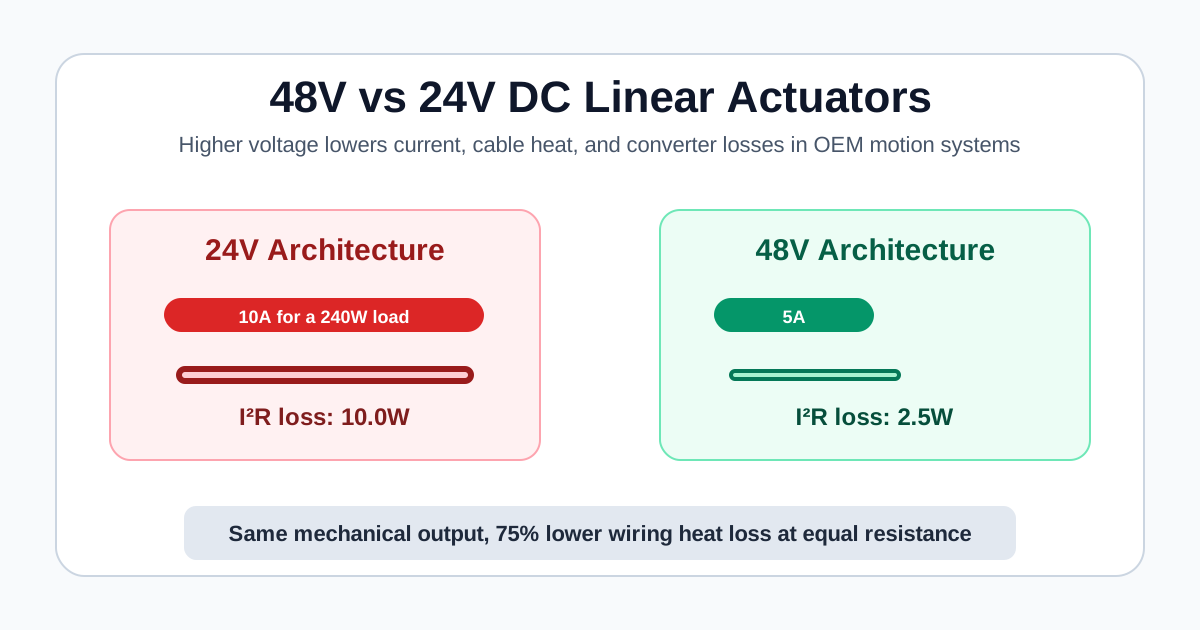
48V vs 24V DC Linear Actuators: Why OEMs Are Shifting to Higher Voltage Architectures
A comprehensive engineering and procurement guide comparing 48V and 24V DC linear actuators. Learn how 48V architectures reduce I²R heat losses, save copper costs, and improve duty cycles in AGVs, AMRs, and industrial automation.
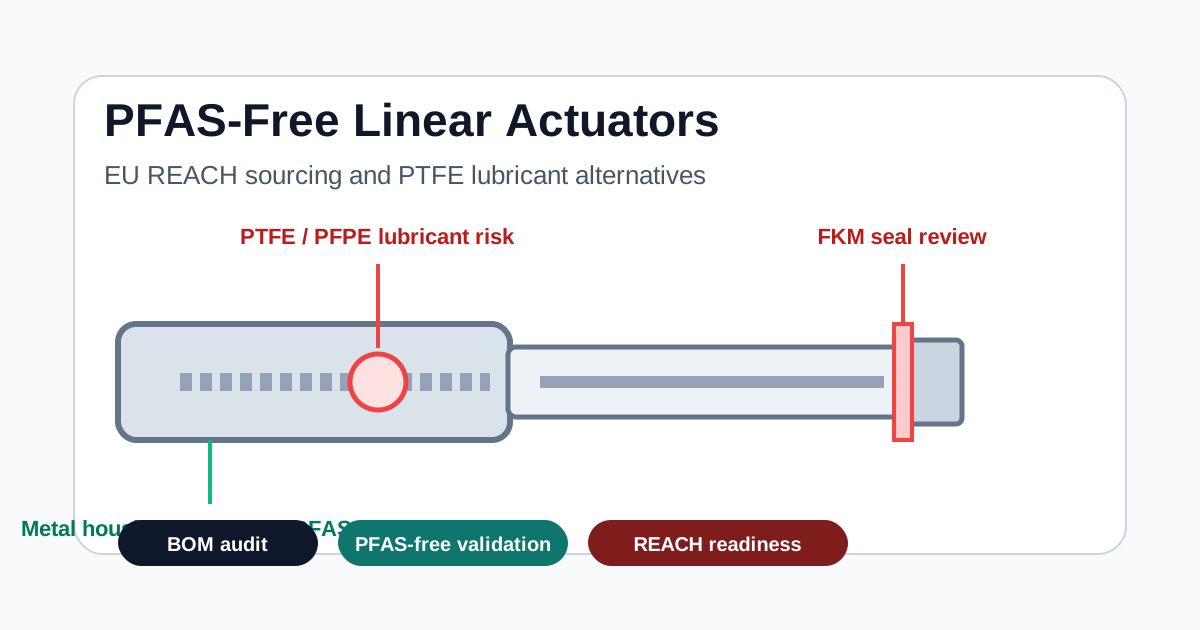
PFAS-Free Linear Actuators: EU REACH Sourcing Guide
Source PFAS-free linear actuators for EU REACH readiness: audit PTFE/PFPE greases, compare seal alternatives, and contact engineering for RFQ review.
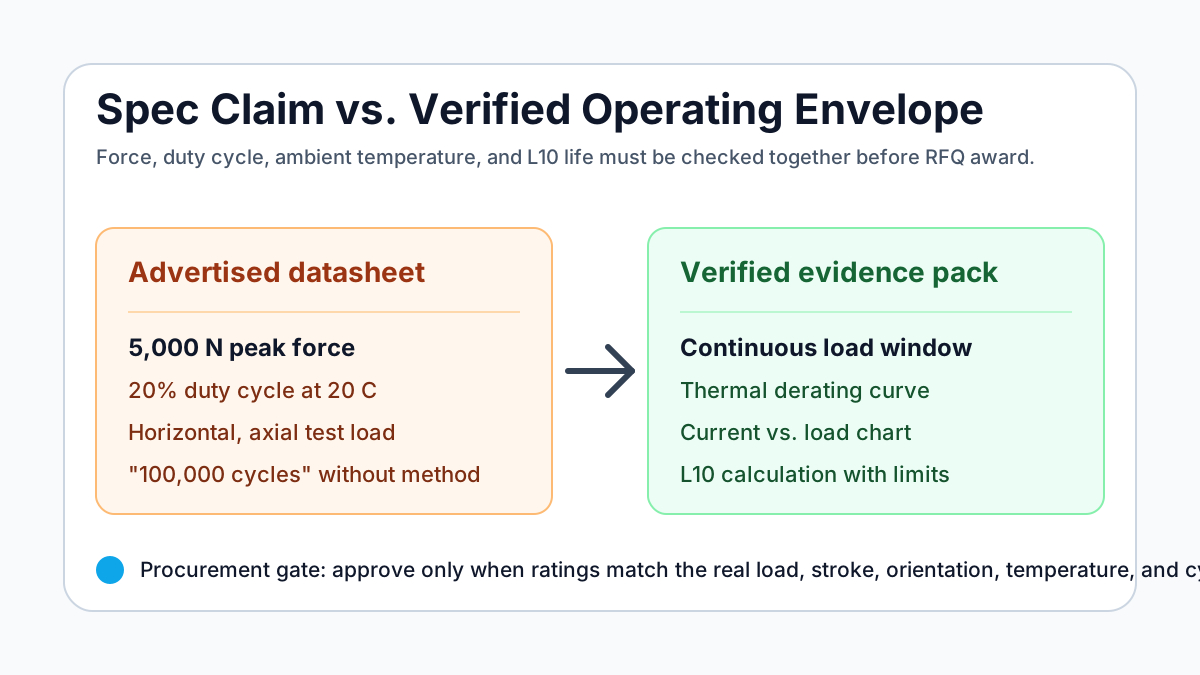
Linear Actuator Spec Inflation: A Procurement Guide to Verifying Force, Duty Cycle, and Lifespan Ratings
Verify linear actuator force, duty cycle, and L10 life claims before RFQ award. Use supplier evidence checks to avoid inflated specs and early failures.